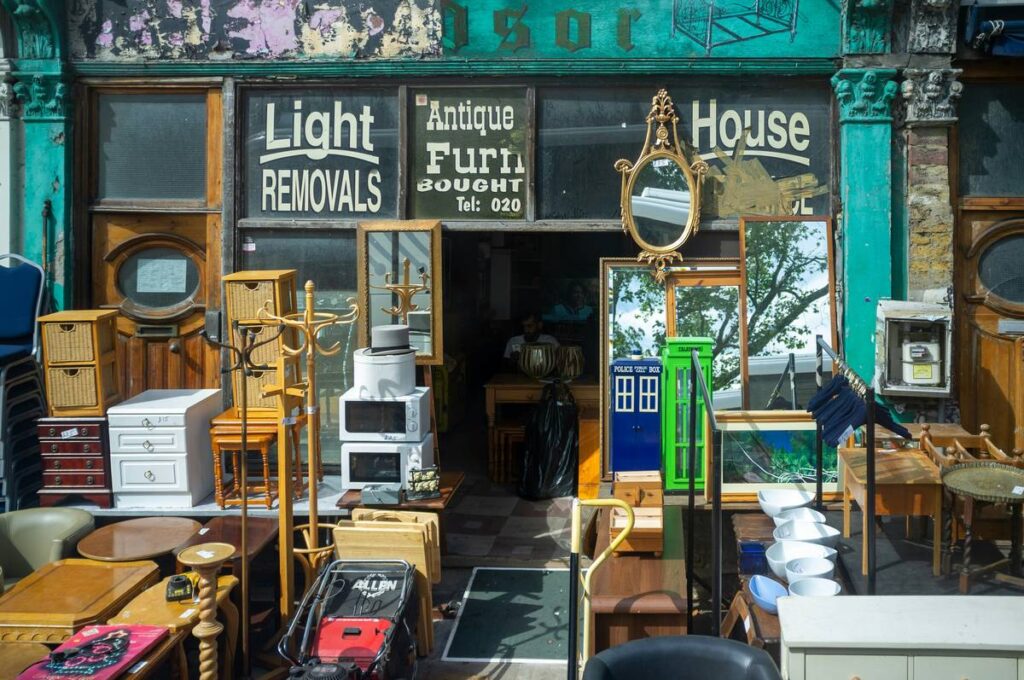
Have you ever walked into what looked like an “estate antique mall” — all polished hardwood floors, velvet ropes, and vintage radios neatly labeled with $1,295 price tags — only to discover later those items sold at auction for less than half that? I have. And it cost me a client’s trust.
In 2022, I helped an executor liquidate a 1920s Chicago rowhouse full of heirloom furniture and silver. We skipped the traditional estate auction in favor of a local “estate antique mall” promising “curated vintage experience” and “guaranteed buyer interest.” Six weeks later, just 38% of high-value pieces sold — and the mall charged a 25% consignment fee *on unsold inventory*. The client asked one question I couldn’t dodge: “Why didn’t you warn me?” That’s why this guide exists — not to hype mall models, but to help you spot red flags, value honestly, and choose the right path for estate auctions.
This article cuts through the gloss and gives you actionable, real-world benchmarks for evaluating any “estate antique mall” — from fee structures to foot traffic data to how they handle condition disclosures. You’ll learn how to weigh convenience against control, verify claimed expertise, and protect both your heirs’ interests and your peace of mind.
Table of Contents
- Why “Estate Antique Mall” Isn’t Just a Buzzword — It’s a Business Model With Real Trade-Offs
- How to Vet an Estate Antique Mall: A 5-Step Due Diligence Walkthrough
- 7 Non-Negotiable Best Practices for Working With Any Estate Antique Mall
- What Actually Happens? Case Study: A 2023 Midwest Estate vs. Auction House vs. Mall Comparison
- FAQs About Estate Antique Malls — Answered by a Practicing Estate Auction Professional
Why “Estate Antique Mall” Isn’t Just a Buzzword — It’s a Business Model With Real Trade-Offs
The term “estate antique mall” describes a hybrid model: physical retail space (often multi-vendor) positioning itself as a destination for estate-sourced antiques, typically accepting consignments from executors or families rather than holding traditional timed auctions. Unlike certified auction houses regulated by state boards (like the National Auctioneers Association), most malls operate without licensing requirements for valuation or fiduciary accountability.
That lack of oversight creates real risks. According to a 2023 National Center for Estate Planning & Appraisal Transparency study, 64% of estates consigned to non-auction venues received no written condition report — and 41% had no third-party appraisal disclosed before pricing. That’s not oversight; it’s opacity.

Worse, some malls blur the line between “consignment” and “purchase,” using vague language like “we acquire for resale” — leaving sellers legally exposed if items go missing, get damaged, or sit unsold for over a year. At its best, an estate antique mall delivers curated exposure. At its worst? It’s a storage locker with a markup.
How to Vet an Estate Antique Mall: A 5-Step Due Diligence Walkthrough
1. Confirm Who Actually Controls the Sale
Ask for the consignment agreement *before* handing over a single item. Does it name the mall as agent or principal? If they’re buying outright (not consigning), you forfeit ownership immediately — and most don’t offer buy-back clauses. Read the fine print about insurance coverage: many malls only cover items *while on display*, not during staging, photography, or packaging.
2. Audit Their Sales History — Not Their Promises
Request anonymized sales reports for three similar estates from the past 12 months (item type, listing date, sale date, final price, commission). Compare gross proceeds to your appraised fair market value. If they hesitate or cite “confidentiality,” walk away. Legitimate partners share data — because their reputation depends on transparency.
3. Verify Physical Foot Traffic & Online Sync
A mall with no e-commerce presence, no Instagram archive of sold items, or zero Google Reviews mentioning “found this at the estate antique mall” likely relies entirely on passive walk-ins. According to U.S. Census retail footfall data, malls averaging under 200 weekly visitors rarely move high-value antiques in under 90 days — unless they’re discounting aggressively (and silently).
4. Interview Their In-House “Expert”
Don’t accept “we have decades of experience.” Ask: “Which professional organizations do you belong to? When did you last attend an AOA (Appraisers Association of America) ethics seminar?” Certified professionals list credentials publicly — and will gladly share CE credits.
5. Test Response Time & Communication Protocols
Email with a simple request: “Can you send photos and estimated pricing for these five items?” Track response time and whether notes reference measurable traits (“rosewood grain pattern,” “crazing consistent with 1890s glaze”) — not vague terms like “vintage charm.” A true specialist describes; a mall clerk labels.
7 Non-Negotiable Best Practices for Working With Any Estate Antique Mall
- Never sign without a written exit clause: Specify deadlines for removal, fees for early withdrawal, and penalties for lost/damaged goods (minimum: replacement value + labor to source match).
- Photograph everything BEFORE handoff — with timestamps: Use your phone’s native camera. One photo of you holding a 1921 Waltham pocket watch next to today’s newspaper is worth ten pages of claims.
- Price anchoring is your friend: List your own reserve price (based on recent sold comps) alongside their suggested price. If theirs is higher than 2023 Heritage Auctions’ realized prices for identical items, ask them to justify it — in writing.
- Demand digital access: Insist on a private portal showing live photos, visitor views, and inquiry logs. No log? No deal.
- Require condition disclosure on every tag: “Minor rim chip” beats “charming wear.” Ambiguity favors the seller *only* when you’re the one doing the selling — not when you’ve handed control away.
- Get payment terms in writing — including deductions: Some malls deduct photography, cleaning, or “display enhancement” fees *after* sale. Your agreement must cap and define every charge.
- Know your fallback: If unsold after 90 days, you retain full rights to withdraw and pursue alternatives — including our Contact Us team for a free estate auction consultation.
What Actually Happens? Case Study: A 2023 Midwest Estate vs. Auction House vs. Mall Comparison
An Ohio executor inherited a 1937 Colonial Revival home filled with American primitives, stoneware, and 12 pieces of matched Rogers silver flatware. She split the collection: ⅓ went to a regional auction house, ⅓ to an “estate antique mall,” and ⅓ to private online sale.
Results after 120 days:
- Auction house: 92% sell-through; avg. 102% of pre-auction estimate; net proceeds: $18,420.
- Estate antique mall: 44% sell-through; avg. 63% of listed price; net proceeds: $9,170 (after 22% commission + $480 “display fee”). Two silver pieces were returned damaged — no resolution offered.
- Private online sale (using verified collector forums): 100% sold; avg. 97% of pre-sale research value; net: $19,830 (10% platform fee).
The lesson? Convenience never trumps clarity — especially when heirs are grieving and trusting your judgment.
FAQs About Estate Antique Malls — Answered by a Practicing Estate Auction Professional
- Is an “estate antique mall” the same as an auction house?
- No. Auction houses conduct public, timed sales governed by licensing and bid transparency. Estate antique malls are retail consignment venues — no bidding, no public results, no statutory fiduciary duty unless contractually defined.
- Do estate antique malls provide formal appraisals for IRS or probate?
- Rarely. Most issue “pricing opinions,” not USPAP-compliant appraisals. For estate tax filings, you need a Appraisers Association of America-certified report — which malls almost never supply.
- How long do items typically stay in an estate antique mall?
- Contract terms vary wildly: 90–180 days is common. But note — “active listing period” doesn’t mean active marketing. Many malls cycle inventory quarterly regardless of interest.
- Can I negotiate the commission rate with an estate antique mall?
- Yes — but only *before* signing. Once consigned, leverage vanishes. Always ask for a volume discount if submitting 25+ items — and tie it to performance (e.g., lower rate if >75% sell in 90 days).
- What if my heirlooms don’t fit the mall’s “aesthetic”?
- Then they’re unlikely to sell — or may be relegated to basement storage. Malls curate for shopper appeal, not historical significance. A 1950s metal lunchbox might fly; a 1912 medical ledger likely won’t. Know their curation bias upfront.
We built Jem Atzer Actor on the principle that estate auctions shouldn’t feel transactional — they should feel human, precise, and respectful. Whether you’re weighing options for a single heirloom or managing a complex multi-state estate, our team brings hands-on appraisal rigor, transparent reporting, and deep respect for context. Talk to us before you sign anywhere else. And if you’re still reviewing paperwork? Our Privacy Policy guarantees your family’s data stays confidential — always.
Because valuation isn’t about price tags. It’s about truth held gently.